At the University of Northampton, the Popular Music department is creating an environment where traditional recording workflows and cutting-edge spatial audio research live side by side. At the helm of this innovative programme is Dr. Stace Constantinou, the course leader for both the Popular Music and Music Production degrees, whose extensive research profile highlights a career dedicated to sonic exploration.
With a rich background in avant-garde spatial sound and a deep commitment to preparing students for a changing industry, Constantinou has spent years embedding reliable, functional and inspiring tools into the university curriculum.
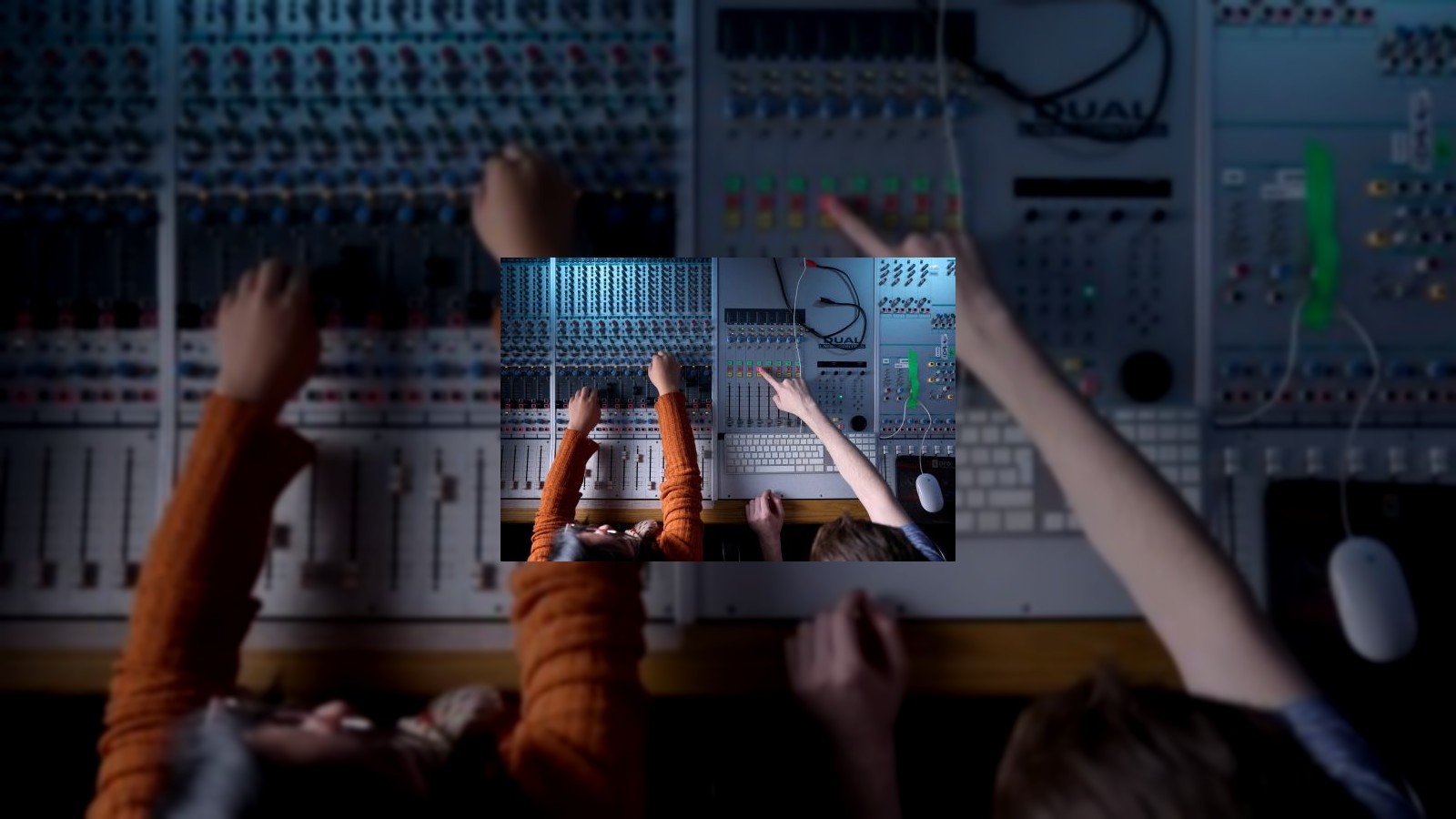
The audio journey begins in the university’s large professional recording facility. The space features large control rooms and two live rooms, anchored by an Audient ASP8024 large-format console.
“One reason for the Audient is the ‘wow factor,’” Constantinou said. “The ASP8024 desk looks beautiful. It’s highly functional. It works like an affordable version of an SSL or Neve. It’s highly reliable. It’s an excellent desk for teaching and simulating professional environments. I can’t think of any downsides.”
The console provides a bridge between analog workflow and digital flexibility, integrating with the department’s Pro Tools setup. In the six years Constantinou has worked at the university, the desk has proven itself reliable for recording and tracking.
To help students understand how their work translates across different listening systems, the mixer supports multichannel mix-down monitored through a range of monitors. These include large PMC SX-Pro monitors, mid-sized PMC Result 6 speakers and custom Auratone-style speakers that Constantinou built himself.
Beyond the main console, the Audient ecosystem extends across the department with iD audio interfaces. Constantinou said the iD4 and iD44 interfaces are used regularly because they are simple, reliable and easy to use.
While students work with the ASP8024 and iD interfaces, Constantinou’s personal research is pushing into spatial audio. He recently set up a dedicated home studio environment, a compact room where he has integrated Audient’s ORIA immersive audio interface to manage an eight-speaker Genelec array.
Constantinou’s interest in spatial audio dates to his early work as a crew member at a contemporary music festival in Huddersfield, where eight live percussionists were arranged around the space with the audience positioned in the middle.
That experience led him to experiment with quadraphonic sound, octophonic sound, binaural recording and stereo techniques using Jecklin boards. As the wider industry embraces spatial audio, ORIA has become a tool for his research into live spatial mix patterns and varying speaker setups.
“The ORIA system is currently being used more for research purposes,” Constantinou said. “It offers a range of features that make it particularly useful for exploring spatial audio. This includes detailed control over speaker setups and sound placement, which is essential when working on immersive audio projects.”
By blending traditional studio training with exposure to spatial workflows, the university aims to prepare students for changing demands in the audio industry.
For more information, visit audient.com.